Most guides on ranking in ChatGPT Search give you the same checklist: add FAQ schema, write question-based headings, structure content for AI extraction, submit to Bing Webmaster Tools.
None of it is wrong. Most of it is also the wrong place to start.
We’ve run systematic off-page SEO programs for 60+ B2B SaaS companies over the last 18 months. The work wasn’t designed to “optimize for ChatGPT.” It was designed to build brand presence across the web – earned links, listicle placements, expert quotes in high-authority publications, brand mentions in editorial content.
ChatGPT citations followed as a downstream effect.
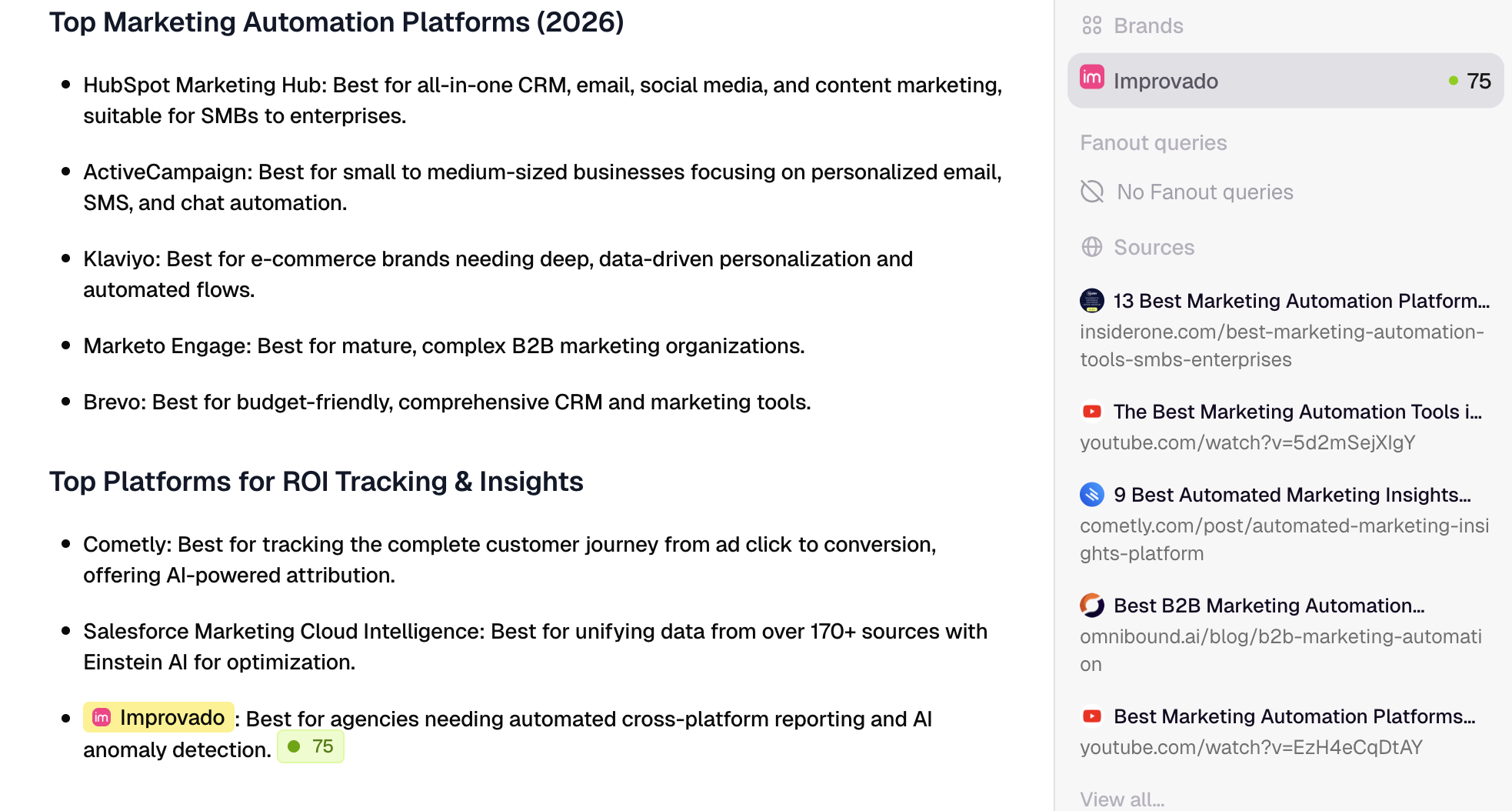
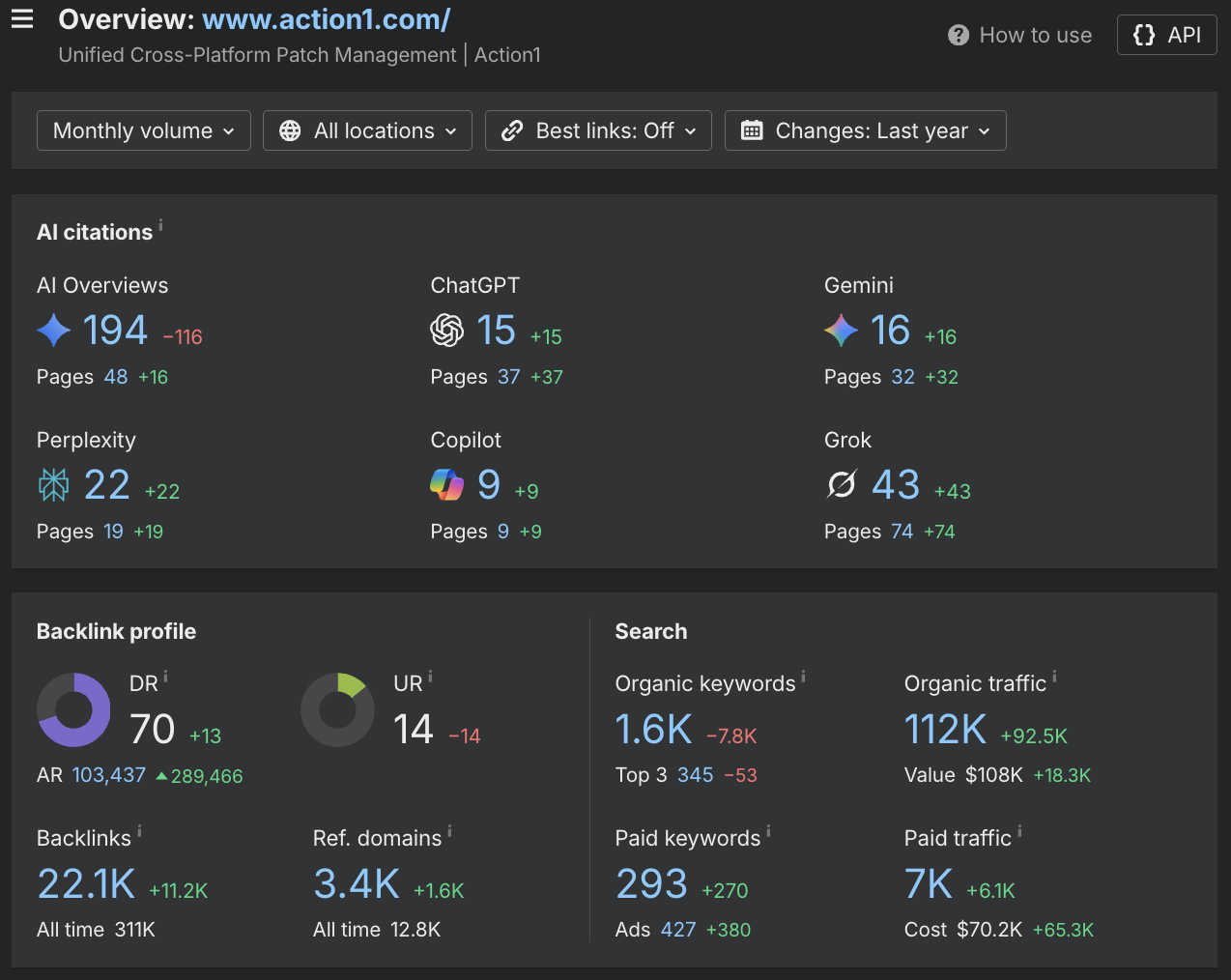
Improvado – a marketing analytics platform – gained 77 new ChatGPT citations, 160 Perplexity citations, and 199 Google AI Overview citations, alongside 78,000 additional monthly organic visits. Action1, an endpoint management SaaS, picked up 19 ChatGPT citations, 17 Perplexity citations, and 617 Google AI Overview citations – plus 49,700 new monthly organic visits.
The variable that changed wasn’t on-page content structure. It was off-page presence.
This guide is what we’ve learned about how ChatGPT Search actually decides what to cite, what moves the needle, and what’s just noise.
How ChatGPT Search decides what to cite
ChatGPT Search operates in two modes, and most advice conflates them.
Training data mode. When web search isn’t triggered, ChatGPT reasons from the knowledge it absorbed during training – articles, forums, reviews, Reddit threads, Wikipedia, and everything else in its corpus. Your brand’s presence here depends on how widely it was mentioned across the web before the training cutoff.
Real-time retrieval mode. When web search is active (increasingly the default), ChatGPT queries Bing’s index, fetches current web content, reads it, and generates a response with inline citations. This is where recency matters and fresh content can surface quickly.
These two modes reinforce each other. A brand that appears frequently in training data gets treated as more authoritative when the model encounters it during live retrieval. And a brand that keeps appearing in fresh, authoritative content builds the signal captured in future training runs.
The Bing connection most teams overlook
ChatGPT Search uses Bing’s index – not Google’s – as its primary source for real-time retrieval. Seer Interactive’s research found that 87% of ChatGPT citations align with Bing’s top results. If your pages aren’t indexed properly in Bing, or if you’ve been ignoring Bing Webmaster Tools, you’re limiting your visibility before you start.
This also means building authority in the places Bing trusts – high-DR editorial sites, established publications, review platforms – directly feeds ChatGPT’s retrieval pipeline.
Why most ChatGPT ranking advice misses the point
The standard playbook optimizes for the extraction step – how the model pulls a clean answer from your page. That’s the last step. The model needs to find you first, consider you authoritative, and decide you belong in the answer. Only then does content structure matter.
If your brand isn’t present in the sources ChatGPT reads – listicles, review sites, Reddit threads, YouTube transcripts, editorial publications – no amount of on-page formatting gets you cited.
Neil Patel’s team analyzed 82 factors across 100+ ChatGPT recommendation queries. The top two correlations were relevancy (.91) and brand mentions (.87) – both off-page signals. Reviews (.61) and authority (.52) followed. On-page structure didn’t make the list.
Wil Reynolds at Seer Interactive found something more pointed: brute-force repetition is currently outperforming genuine thought leadership in ChatGPT results. Agencies listing themselves as “#1” on their own sites and cross-promoting each other in listicles are outranking agencies doing original work. It’s reminiscent of 2005-era link schemes – except it’s working in LLMs.
The takeaway isn’t to spam. It’s that your brand needs to be present – genuinely and frequently – in the conversations happening in your category. If you’re not there, someone using these tactics is.
What actually moves ChatGPT citations
Based on 60+ SaaS engagements, there are two levers. Most teams only pull the second one.
Lever 1: Off-page presence (the primary driver)
This is where the compounding lives. If your competitors are mentioned in a conversation about your category and you’re not, that’s a gap the model notices.
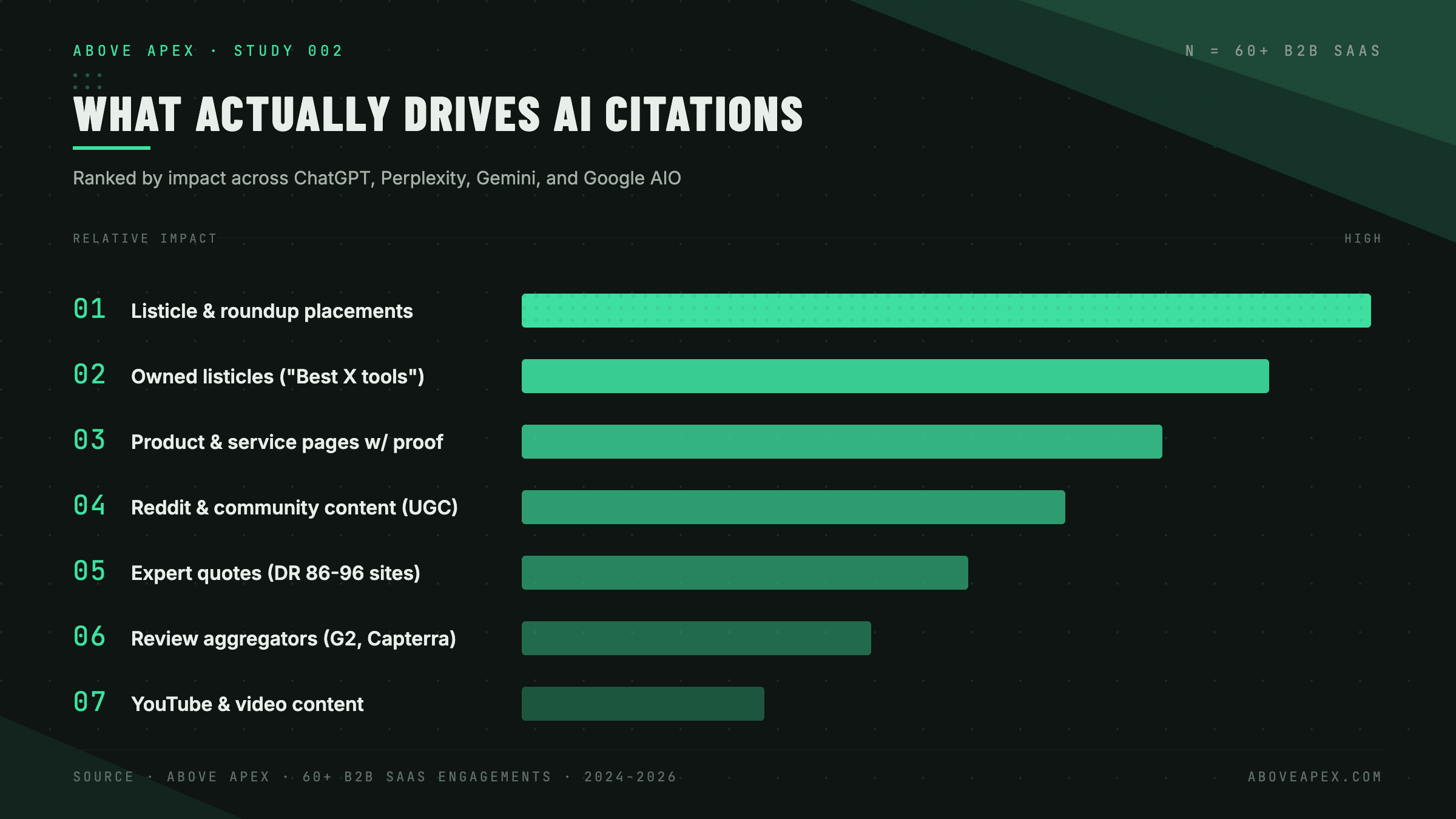
Here’s what we’ve found moves the needle most, in order of impact:
Listicle and roundup placements – the single biggest lever. Every “best [category] tools” and “top [category] software” article that ranks well in Google and Bing. These are the pages ChatGPT retrieves when users ask recommendation questions. If you’re in the listicles, you’re in the answer. We’ve secured over 238 listicle placements for SaaS clients – and this is the tactic with the most direct, measurable impact on ChatGPT citations across every client we’ve tracked.
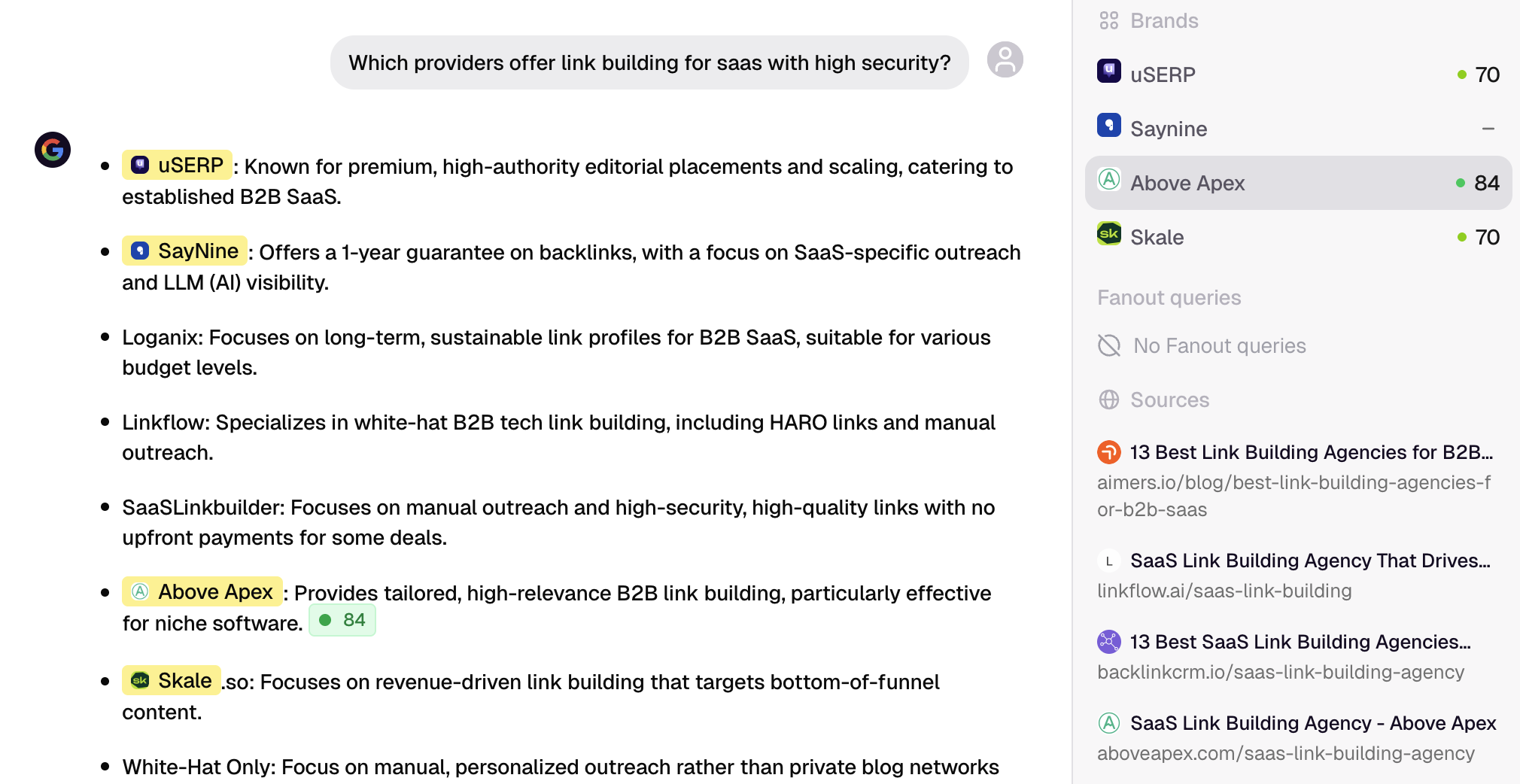
Building your own listicles matters too. When we published our own “best SaaS link building agencies” listicle, it started getting cited in AI Overviews within weeks. Your “best [category] tools” page, built on your domain with genuine comparative analysis, gives the model another authoritative source to pull from – one you control.
Product and service pages with strong social proof. Pages with named case studies, specific numbers, client logos, and video testimonials perform disproportionately well as citation targets. When we built our own SaaS link building service page heavy on social proof, it ranked position 1 within ten days and started appearing in AI Overviews. It wasn’t engineered for AI. It was engineered to be the most credible page on the SERP – and the model treated credibility as the signal.
Reddit and community content. Community-driven platforms account for over half of all citations across ChatGPT, Perplexity, and Google AI Overviews combined, according to an OtterlyAI analysis of 1 million+ AI citations. Genuine presence in relevant subreddits – real engagement, not astroturfed posts – builds a surface the model reads and trusts.
Expert quote placements. Your name and expertise in high-authority publications. We’ve published 250+ expert quotes in HubSpot, Fast Company, Shopify, GoDaddy, Yahoo Finance, Hootsuite, Nasdaq, and Visme – all DR 86-96. Each placement strengthens the entity signal that tells ChatGPT your brand is authoritative.
Review aggregators. G2, Capterra, TrustRadius, Clutch. ChatGPT reads review content and factors it into recommendations. Build profiles, encourage genuine reviews, keep them current.
YouTube. ChatGPT pulls from video transcripts. Comparison videos and reviews in your category that don’t mention you are gaps worth closing.
Editorial and media coverage. Digital PR that places your brand alongside your category keywords in high-trust publications. Every earned mention strengthens how both Bing and ChatGPT’s training data interpret your brand.
The compounding timeline
First signals can appear within a week of new placements going live – ChatGPT’s real-time retrieval picks up freshly indexed content fast. But the real compounding happens in the 90-120 day window. That’s when the accumulated off-page presence reaches a tipping point: multiple listicles, editorial mentions, review profiles, and community threads all reinforcing the same entity signal. The model can’t answer category questions without encountering your brand.
For both Improvado and Action1, the citation growth was continuous and compounding, peaking in that 90-120 day bracket. It wasn’t a single tactic that flipped a switch – it was the accumulated weight of presence across surfaces.
One brand moat, all models benefit
We don’t optimize separately for ChatGPT vs. Perplexity vs. Gemini vs. Google AI Overviews. Some models may pick up your content faster or weight certain sources differently, but the fundamental signal is the same: brand presence across the web.
When you build your brand moat – filling every gap where your brand should be mentioned but isn’t – it affects all models. Improvado’s numbers tell the story: 77 ChatGPT citations, 160 Perplexity citations, 199 AI Overview citations. Same engagement. Same off-page work. Different models, same outcome.
Lever 2: Owned content built to be cited
The second lever is pages on your own domain structured for AI extraction. Important, but secondary to the authority built off-page.
Lead with a direct answer. Question-based headings followed by a concise 40-60 word answer paragraph. Then expand with depth and evidence.
Include original data. Proprietary research, first-party benchmarks, named case studies with real numbers. AI models heavily favor content that adds new information.
Keep it fresh. Content updated within 30 days receives significantly more citations. Update key pages monthly with new data and current dates.
Name specific entities. Mention tools, companies, and products by name. ChatGPT reasons in entities – content that maps entities to use cases gives the model what it needs to construct an answer.
The technical basics
This won’t differentiate you, but neglecting it can block you entirely.
Don’t block AI crawlers. Check your robots.txt for OAI-SearchBot, ChatGPT-User, and GPTBot. Blocking eliminates citation possibility and gains almost nothing.
Submit to Bing Webmaster Tools. Your key pages need to be indexed in Bing. Submit your sitemap and check for crawl errors.
Clean metadata. Descriptive title tags, accurate meta descriptions, and Open Graph tags help retrieval systems understand your pages.
Fast, clean page loads. Heavy JavaScript rendering, slow loads, and interstitials reduce retrieval success.
How to measure ChatGPT visibility
ChatGPT doesn’t have fixed rankings – responses vary by phrasing, context, and whether web search is active. But you can build a useful practice.
Run target prompts manually. Build a list of 20-30 queries your buyers would ask. Run them weekly, with and without web search. Track which brands appear and which sources get cited.
Test across platforms. ChatGPT, Perplexity, Gemini, and Google AI Overviews all have different retrieval behaviors. Testing across all four gives you a complete picture.
Monitor competitors. Track where competitor mentions come from. Which listicles? Which Reddit threads? This tells you exactly where to focus your off-page work.
Use emerging tools directionally. Platforms like Otterly and Peec AI are building AI visibility tracking. Useful for systematizing manual work, but the space is immature – treat results as directional, not absolute.
Our take from the field
ChatGPT’s behavior is probabilistic. The same query produces different results on different days. The brute-force tactics Wil Reynolds flagged will likely get discounted over time – OpenAI has strong incentives to improve result quality, just as Google eventually penalized manipulative link schemes.
The strategy that survives all of this is the one that doesn’t depend on gaming a specific system. Build genuine authority. Be present in every conversation where your competitors show up. Earn mentions in the places both humans and AI models trust.
This is the same approach that works for Google AI Overviews, Perplexity, and traditional SEO. The platforms change. The principle doesn’t: the most referenced, most credible, most present brand in a category is the one that gets cited.
We’ve seen it compound across 60+ B2B brands. The pattern is consistent. If your competitors are being named by ChatGPT and you’re not, the problem almost certainly isn’t your heading structure. It’s your web presence.
FAQs
How is ranking in ChatGPT different from ranking in Google?
Google ranks web pages and shows a list of results to click. ChatGPT synthesizes information from training data and real-time web retrieval (via Bing) to generate a direct answer, citing what it considers most authoritative. You’re competing to be the brand the model names – influenced by your entire web presence, not individual page strength.
Does traditional SEO help with ChatGPT visibility?
Indirectly. Strong domain authority and backlink profiles correlate with the web presence that earns citations. But a large percentage of URLs ChatGPT cites don’t rank in Google’s top 100 – so Google rankings alone aren’t sufficient. You need broad, multi-surface presence.
How long does it take to appear in ChatGPT results?
First signals can appear within a week for real-time retrieval. But meaningful, compounding visibility typically builds over 90-120 days of sustained off-page work. That’s the timeline we’ve seen across both Improvado and Action1.
Can new websites rank in ChatGPT?
Yes. ChatGPT’s live retrieval doesn’t weight domain age as heavily as Google, and backlinks explain only a small percentage of AI citations. New domains with strong content and original data can compete. The solution: build off-page presence aggressively from day one.
Should I block AI crawlers?
No. Blocking eliminates citation possibility while offering minimal content protection. The models trained on existing internet archives already – blocking future crawling just prevents them from retrieving your latest content.
What’s the most impactful single tactic for ChatGPT visibility?
Listicle placements. Getting your brand into the “best [category] tools” and “top [category] software” articles that rank well in both Google and Bing is the single highest-impact tactic we’ve measured across 60+ engagements. ChatGPT retrieves these pages directly when users ask recommendation questions.